I'm Sohaib Waheed, an AI Product Architect and the founder of Zaltech AI, an AI product studio with more than 20 shipped products across healthcare, legal tech, real estate and enterprise B2B.
I spent years writing specs for software I couldn't build myself, and paying other people to build it. In 2021 that cost me $20,000. So I learned the part I couldn't see: architecture, retrieval, agents, the code. The Paper-First Method is the process that came out of it: paper, a session with Claude that pushes back, the architecture, the stack, the brief, Cursor and Claude Code, deploy. It's how I've built 25–30+ applications, and how Zaltech AI builds today.
Most of my work now sits in regulated industries, where an answer that merely sounds right isn't good enough. For a medtech client I architected a multi-agent compliance engine that took regulatory document accuracy from 41% to over 90% across FDA 510(k) submissions, a platform that went on to win MedTech World's Best Use of AI in Healthcare award.
What I do isn't consulting in the usual sense. I sit with a business, find where AI creates real value rather than where it sounds impressive, design the architecture, and then build it: retrieval pipelines, multi-agent orchestration, voice systems, and the evaluation harnesses that keep them honest in production. Expert-Vetted on Upwork. Toptal vetted.
Where I focus
Agentic systems. Multi-agent architecture with LangGraph and CrewAI, retrieval and memory, evaluation harnesses, cost and drift monitoring. Reusable infrastructure, so the second workflow costs a fraction of the first.
Memory is the moat. Most AI products stop at retrieval. The systems I design layer semantic, relational, temporal and behavioural memory, so context compounds instead of resetting every session, and a human stays in the loop wherever confidence is low.
Regulated AI. Compliance-grade AI for pharma, medtech and financial services: traceable evidence, auditable reasoning, and accuracy you can defend to a regulator.
The path here
2016Consulting foundation
Graduated from UTS Sydney and started in management consulting, learning to frame messy business problems before reaching for a solution. A habit that still shapes how I scope AI work.
2018Into product
Moved into product management. Discovery, roadmaps, Agile delivery, and the unglamorous work of finding out what users will actually adopt. Left a good job in Sydney to start again in Pakistan, where "everyone said you're crazy".
2020The GPT-3 pivot
Saw GPT-3 and reorganised my career around it. Built early LLM applications and retrieval systems while most of the industry still treated language models as a novelty.
2021The $20,000 lesson
A first startup attempt as a non-technical founder lost $20,000. The lesson: specify what you can see. Started on Upwork writing user stories, two hours a day, and put 70% of the income back into the product.
2022Architect, not just manager
Started building what I specified. LangChain, vector databases and AI-assisted development collapsed the gap between the roadmap and a working system. Upwork Expert-Vetted, one of the first three Pakistanis in product management. Then Toptal.
2023Founded Zaltech AI
Launched an AI product studio for zero-to-one work, delivering across healthcare, legal tech, real estate and enterprise B2B.
2024Products at scale
Shipped a voice AI platform handling over 1,000 calls a day, and launched PropoZal.ai to 100 users and 2,000+ generated proposals within three weeks of release.
2025–26CPTO roles, and the method
Leading CPTO roles for startups and SMEs: full-cycle AI product delivery, from the first page to production. Wrote the Paper-First Method down, bought the domain, and built jobfutureai.com with it in one evening, on camera.
Products we own at Zaltech AI
No-code builder
Zagent AI
One prompt to a live business. Plans the pages, generates the screens, scaffolds the API, deploys in one click.
Healthcare
MedScribe AI
Clinical documentation.
Enterprise
Zal GPT
Private enterprise intelligence.
Multi-industry
Levo AI
AI voice agents for sales.
Real estate
PropertyPilot AI
Real estate automation.
Public · built with this method
The AI Readiness App
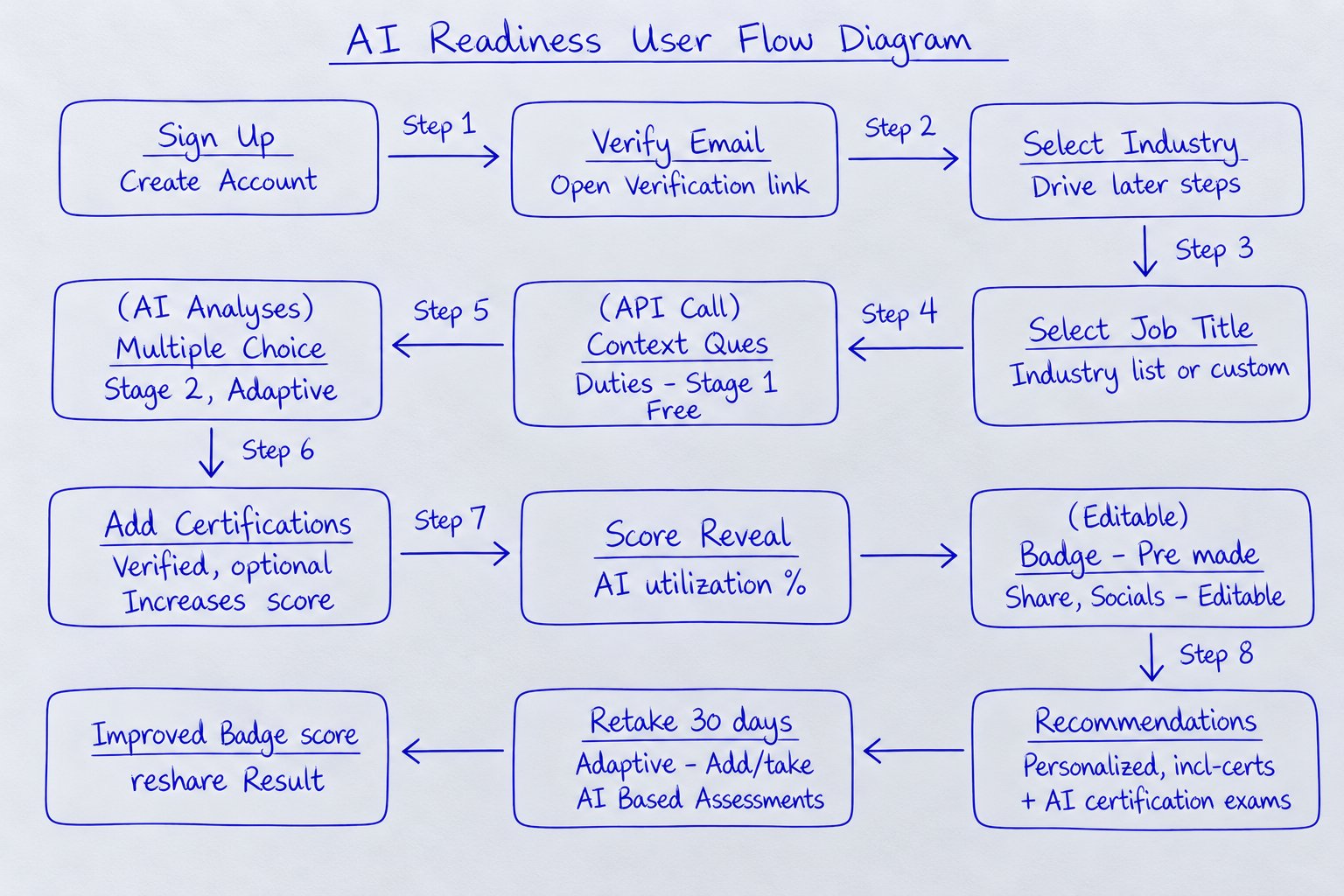
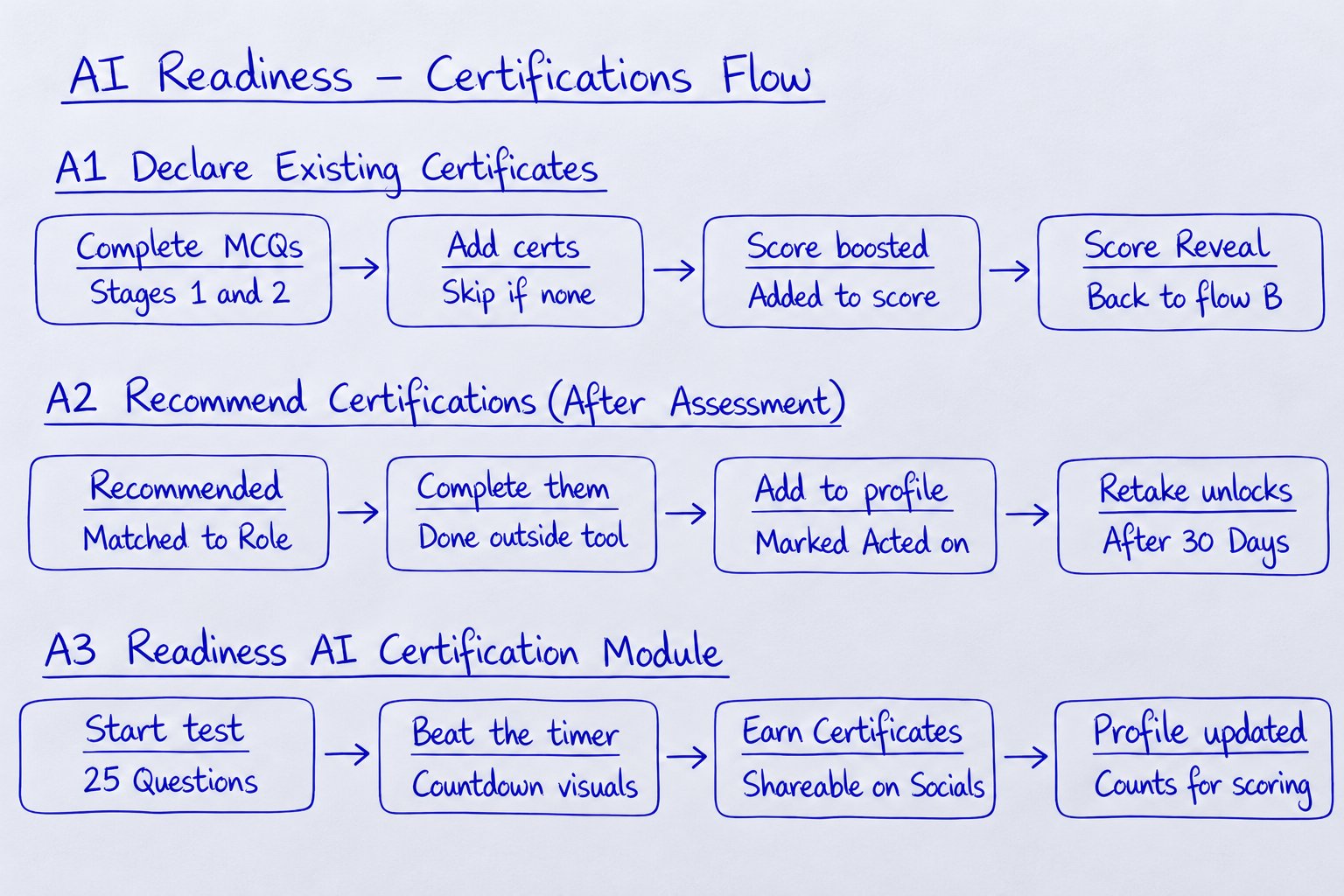
jobfutureai.com. Will AI take my job? An honest answer for your actual work, built in one evening.
What I build with
Models and agents
Anthropic Claude · OpenAI · LangGraph · LangChain · CrewAI · LlamaIndexRetrieval and memory
Pinecone · Weaviate · ChromaDB · Qdrant · MongoDB Atlas Vector · evaluation harnessesBuild
Python · FastAPI · TypeScript · React · Next.js · PostgreSQL · MongoDBVoice
Vapi · Retell · Twilio · ElevenLabs · DeepgramThe method's tools
Paper · Claude · Cursor · Claude Code · the honest-advisor and security-hardening skillsInfrastructure
AWS · GCP · Supabase · Vercel · Docker · n8n