
When is an app built with AI ready to ship?
When it meets the DONE line from the brief, not when it looks finished. Three checks:
- It deploys from main. No manual steps on a laptop. Merge, and it goes live.
- It has seeded demo data. Someone can open it and see it working without creating their own data first.
- It has a runbook. Three lines: how to restart it, who to call, how to roll back.
If only you can run it, it isn't done.
Why should I use the app as a user before launch?
Because some gaps only show up when you're the person filling in the form. A model can review code. It doesn't sit in the user's seat. Go through the flow from the page, start to finish, as someone who has never seen it. Note every moment you hesitate. Those are bugs too.
What goes in a runbook for a small app?
Three lines, in plain words:
- Restart: the one command or button that brings it back.
- Who to call: a name, not a team, and how to reach them.
- Rollback: how to return to the last working version.
Keep it in the repo, next to the code. If it needs more than three lines, the deploy is too complicated. Simplify the deploy, not the runbook.
How do I make sure someone else can run it?
Hand it to someone who didn't build it, with only the repo and the runbook. Ask them to deploy a small change, restart the app and roll back. Watch where they get stuck, and don't help. Every question they ask is a missing line in the README or the runbook.
Check the boring parts too. Secrets live in the environment, not in the code. Logs show a request id, so a problem a user reports can be found. The demo data can be reset without touching real data. None of this is exciting, and all of it decides whether the app survives its first bad day.
What does "back to paper" mean?
The next version starts the way the first one did: on a page. Feedback, bugs and new ideas go onto a new sheet and through the same pushback before anyone opens the coding tool. This stops version two from becoming a pile of prompts on top of version one. Version one is the first step, not the product.
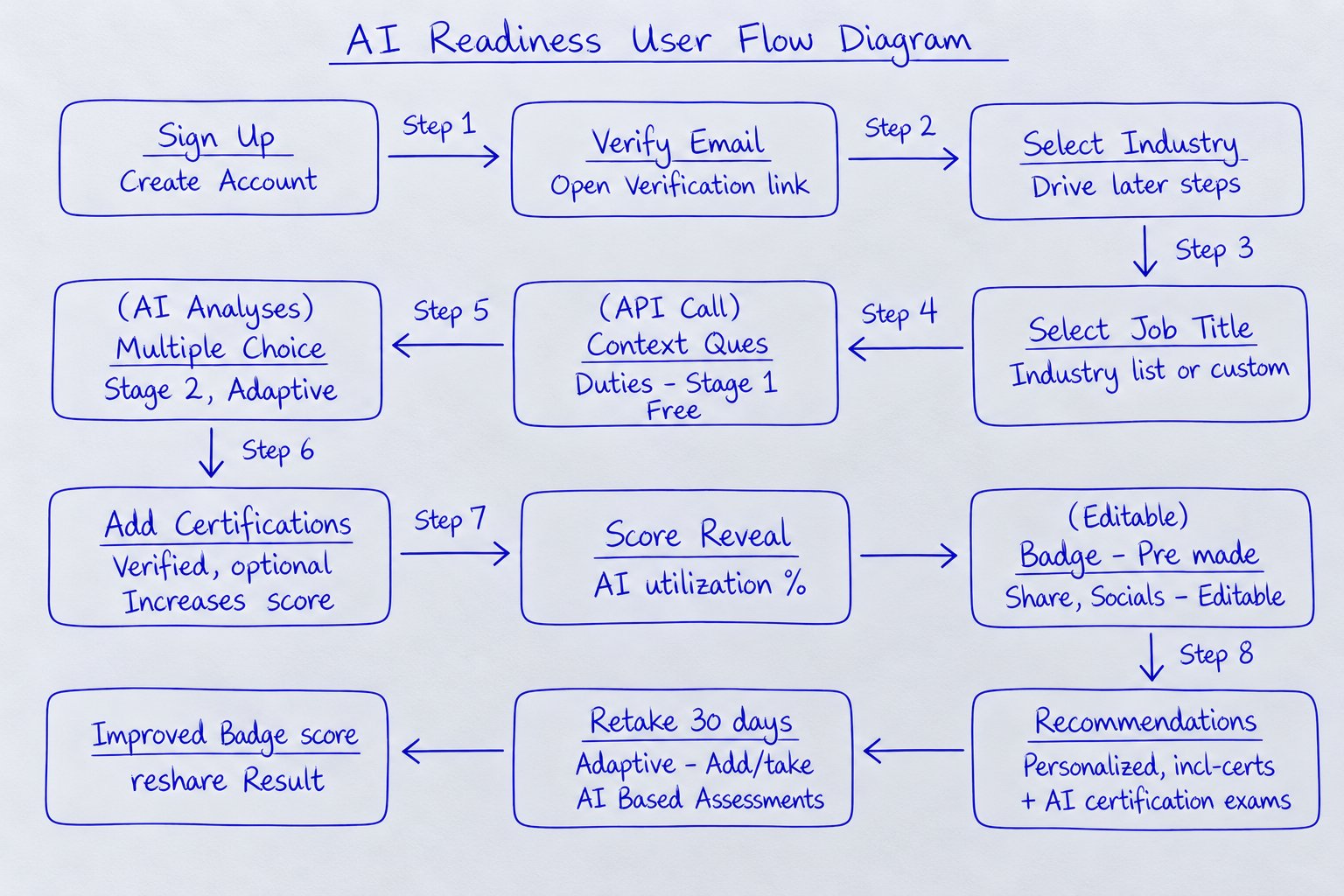
The about page shows this for the AI Readiness App: the next version, drawn as a user flow and a certifications flow, before any of it is built.
What are the common mistakes?
- "It works on my machine." If it doesn't deploy from main, it hasn't shipped.
- No demo data. The first person to open it sees an empty screen.
- No rollback. The first bad deploy becomes an outage.
- Shipping and moving on. Without a new page, the next change goes straight into a prompt.
Which templates should I use?
The hand-over check in The review and the DONE line in the build brief. For the next version, start again with The page.
What did shipping look like in the real JobFuture build?
Before going live I used the app like a user. That found the gap no model caught: it asked for a job title but not the industry. Then one small server on AWS with Docker and HTTPS, the database on MongoDB Atlas, and the domain, bought that morning and attached through the registrar's API from the chat.
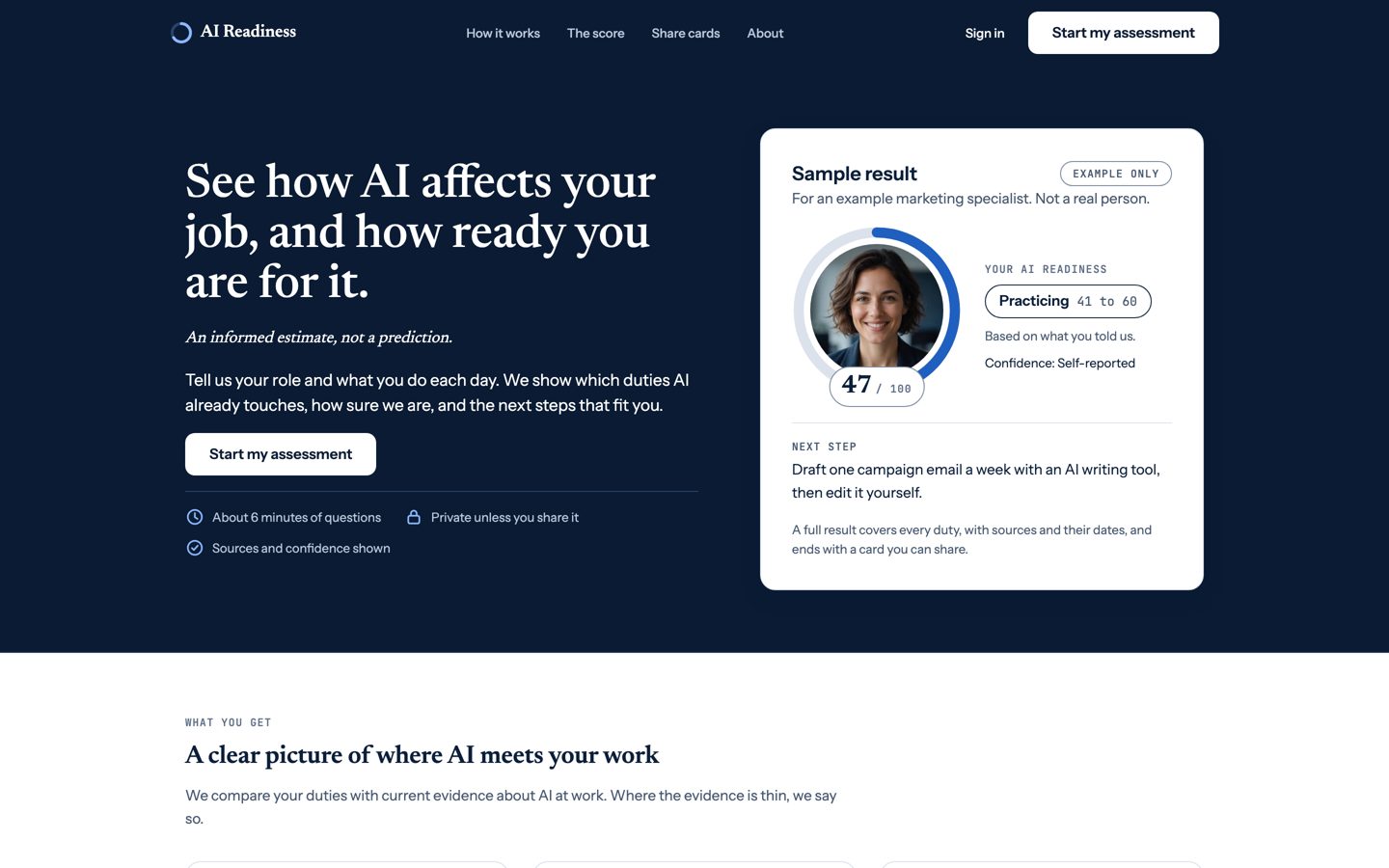
jobfutureai.com was live at about 11:25 pm, under five hours after the first Cursor prompt. Try the app or watch episode 6.
The review
Copy it or download it. No email. Credit: "The Paper-First Method by Sohaib Waheed".